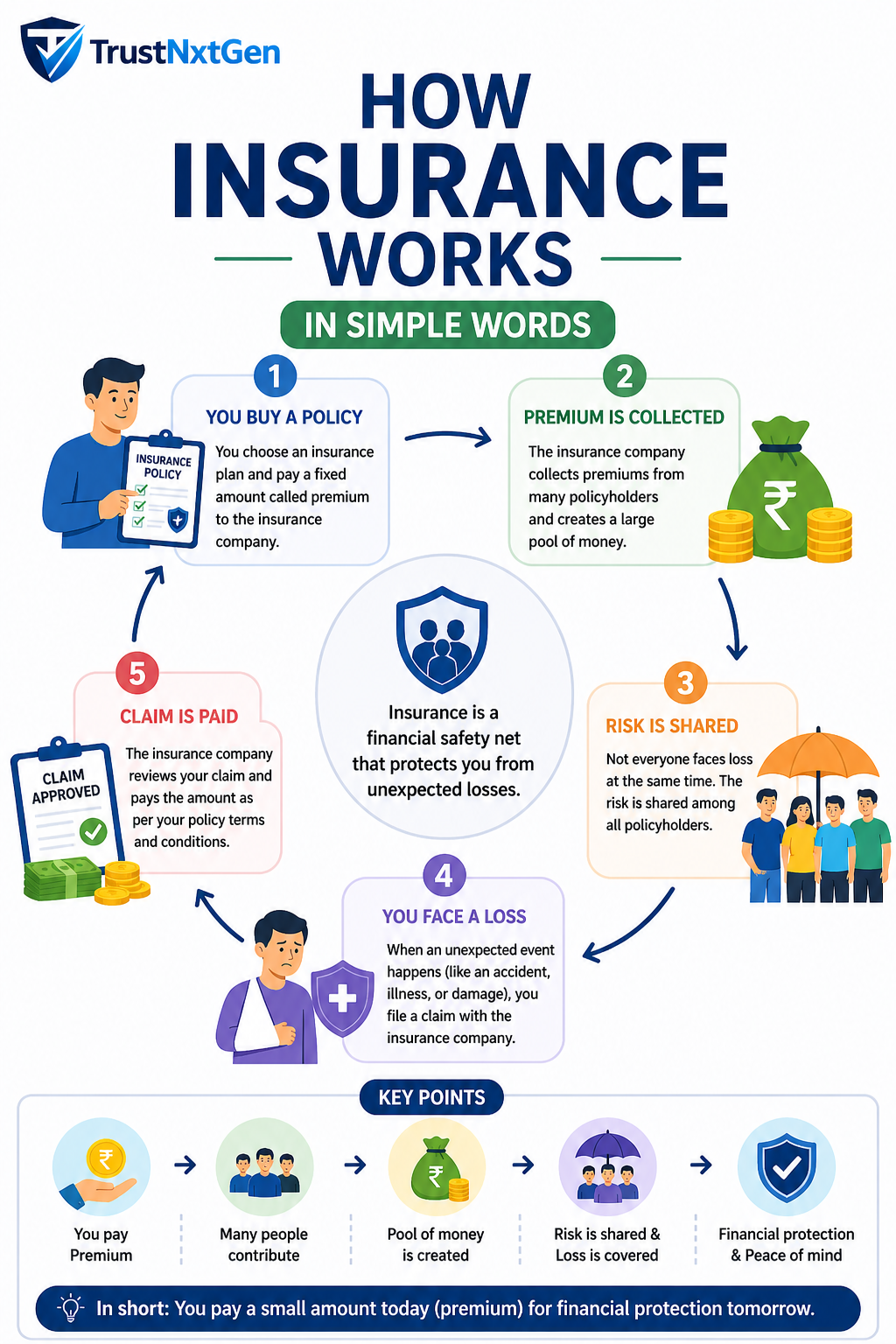

Here’s how it works in simple terms:
Insurance is a financial safety net that protects you from unexpected losses. Instead of facing a huge expense alone, insurance spreads the risk across many people.
When you buy a policy, you pay a fixed amount called a premium to an insurance company like Life Insurance Corporation of India. This premium can be paid monthly or yearly. The company collects premiums from thousands of people and creates a large pool of money.
Now, not everyone will face a loss at the same time. For example, in health insurance, only some policyholders may need hospitalization. When such an event happens, the insurance company pays for the expenses using the pooled money. This process is called a claim.
There are three key elements in every insurance policy:
- Premium – the amount you pay
- Coverage – the protection you get
- Claim – the amount the insurer pays during loss
For example, if you have health insurance and are hospitalized, you can file a claim. The insurer will either pay the hospital directly (cashless) or reimburse you later.
Insurance works on the principle of risk sharing. Many people contribute small amounts so that a few who face losses can get financial support. This reduces the burden on individuals and provides peace of mind.
In short, insurance doesn’t stop risks from happening—but it ensures you don’t suffer financially when they do.